
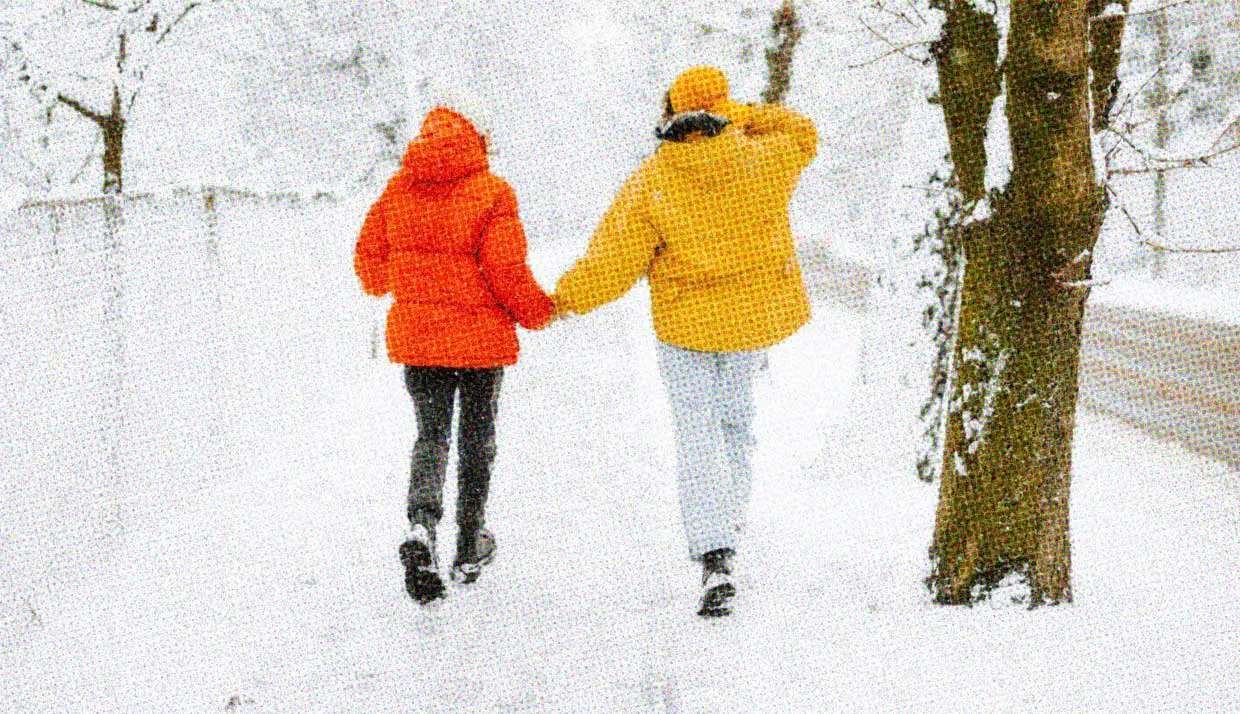

Does the effort you invest in seeking a romantic partner intensify as summer ends? During the colder, darker months, people have been known to engage in “cuffing season”, which means attaching yourself to or having a physical relationship with someone just for the cold winter months.
You know this is not going to be a long-term thing. “Cuffing” is a metaphor for wanting to be attached to someone for a period of time. In the northern hemisphere at least, such behaviour might begin around October and end close to Valentine’s Day. Dating apps have reported that October and November often sees a surge in new profiles and messaging activity.
In our evolutionary past, cuffing may have been necessary for survival. The winter months are cold and dark, and it would have been adaptive for our ancestors to seek out the company of others to keep them warm and safe, over a period when they could perish from exposure, or be more vulnerable to attack from predators. The company of others would have provided warmth, and possibly someone to help protect them.
Cuffing behaviour might also be explained, at least for men, by a variation in testosterone levels. These tend to be lower in the months with the highest temperatures and most daylight, and higher in the winter months. This increase in men’s testosterone levels during the winter months might cause an increase in effort to seek out the company of a sexual partner.
Polish researchers Bogus∤aw Pawlowski and Piotr Sorokowski have noted that men’s judgements of female attractiveness varied seasonally. In their 2008 study, 114 heterosexual men who were asked to assess the attractiveness of women’s photographs over different seasons. The photographs featured waist-hip ratio variations of women in swimming suits, photos of female breasts and photos of average-looking faces of women. The researchers found changes in male preferences for body shape and breast attractiveness across the seasons, although there was no change in men’s ratings of female faces.
The men gave the highest attractiveness scores in the winter, with the lowest scores being given in the summer, so they were more likely to think of someone as attractive in winter compared to summer. The researchers speculated that this could be because in the summer or warmer months, men habituate to seeing women’s uncovered bodies more than in the winter, and accordingly give lower attractiveness ratings at this time of year.
Cuffing could also be associated with a need for touch. Affectionate touching such as hugging or holding hands generally lowers cortisol secretion for both sexes (associated with high blood pressure and irritability) but increases the release of oxytocin (the hormone associated with bonding). When our body releases oxytocin we feel more relaxed, happy, and generally experience a better mood.
In addition, cuffing may quite simply be explained by the fact that during the winter months we are more likely to attend parties and visit friends, for Thanksgiving (if you live in the US), Christmas and New Year, and this increased social interaction increases our chances of meeting others.
<subhead> A subliminal thing
People may not be aware that their relationship-seeking behaviour changes over the winter months, and simply follow instinct. It is possible that the popularity of dating apps may have increased the prevalence of cuffing season. A July 2024 paper suggested people tend to “gamify” dating apps, pushing users to make the most number of matches rather than pursue meaningful connections. This in turn may lead to more cuffing behaviour.
Remember that if you have decided to pursue a winter romance, consider what happens after the cuffing season. Do you have plans with your cuffing partner after the winter? Did you experience a sense of urgency in getting together with your cuffing partner? There is of course no reason why your cuffing relationship should not develop into a long-term relationship beyond the spring. But it may help protect yourself or your partner from disappointment if you’re upfront about what you want.
Cuffing season is the time of year, usually from around October to Valentine’s Day in the northern hemisphere, when people look for a partner to “cuff” themselves to over the colder, darker months. The relationship is often understood to be temporary, although it doesn’t have to be.
Psychologist Martin Graff suggests several possible reasons, including an evolutionary need for warmth and company in the cold, higher testosterone levels in men over winter, a desire for touch that lowers stress hormones and raises oxytocin, and the extra parties and social events of the festive season.
Be upfront about what you want, and think about what happens after winter, including whether you have plans with the person for spring. A cuffing relationship can turn into a long-term one if you both want it to, but being honest from the start helps protect both of you from disappointment.
Read more
The HUD Love Club
How AI is changing sex and dating life
From matchmaking algorithms to chatbot companions, AI is changing sex and dating. Sexologist Amari Leigh explores why people are using it and what to keep in mind.