
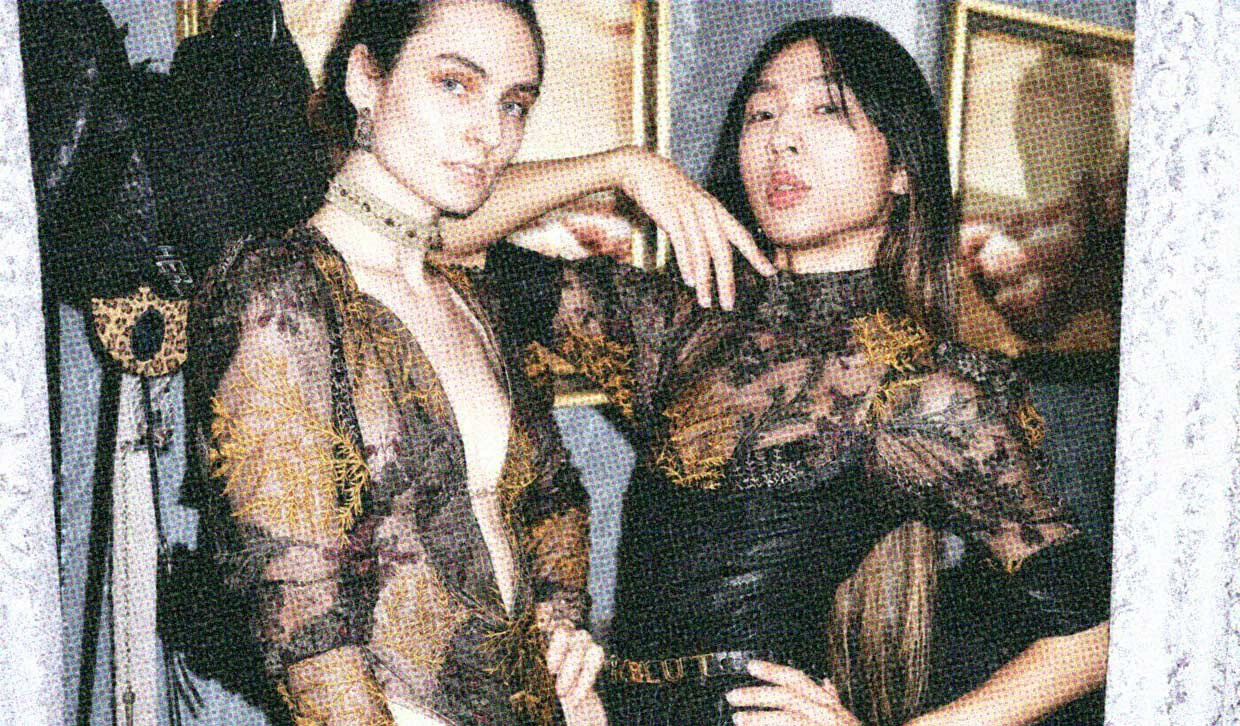

Dressing up, in a sexual context, covers a broad and colorful spectrum. At one end, it might look like slipping into a costume for a bit of role play with a partner. At the other, it encompasses cross-dressing, gender play, and the deeper psychological territory of embodying a different identity through clothing. What all of it shares is the use of what we wear (or do not wear) as a way of exploring fantasy, power, identity, and intimacy.
Dressing up is one of the most common sexual interests there is. Research consistently finds that costume and role play fantasies are among the most widely reported – one survey of over 3,000 Millennials found that 67% described themselves as fans of sexual role play, across genders and orientations. If this is something you're curious about, you are in very good (and very sartorially savvy) company.
Humans have been using costume and clothing to explore identity and desire for centuries. Cross-dressing appears in ancient Greek theatre, where male actors played female roles, and the erotic and symbolic charge of gender ambiguity runs through ancient religious contexts too, including Mesopotamian cults and Greek mythology, where figures like Dionysus were depicted with deliberately fluid gender presentation.
In Japan, Kabuki theatre involved elaborate costuming and gender play, and carried both cultural and, at times, erotic significance – originally performed by women who cross-dressed for male roles, before women were later banned and male performers took on both roles onstage. Victorian erotic literature is full of cross-dressing scenarios, and burlesque, which has roots going back several centuries, has always played with costume, transformation, and desire as intertwined forces. So dressing up has a historical precedent!
Costume-based role play, sometimes called cosplay in sexual contexts (not the same as cosplay that takes place at sci-fi conventions, although there are crossovers, for sure), involves one or both partners dressing up as a character, archetype, or fantasy figure as part of a sexual encounter. The classic examples – the nurse, the teacher, the stranger at a bar – are classics for a reason: They tap into fantasy archetypes that many people find compelling, often because they involve a dynamic, a power shift, a scenario, or a setting that differs from everyday life. (Remember Clive and Juliana – Phil and Claire’s alter egos who met at a hotel bar – in Modern Family?)
Wearing something different can give permission to behave differently, to inhabit a version of yourself, or a character entirely unlike yourself, in a way that feels freeing precisely because it is contained within the scene. Many people find that role play allows them to explore desires or dynamics they would not naturally inhabit in their day-to-day lives.
Getting started is genuinely low stakes. A conversation with your partner about what scenarios interest you, what characters or dynamics feel exciting, and what would feel comfortable to try is a natural starting point. Costumes do not need to be elaborate. A single item, a hat, a pair of glasses, a specific outfit, can be enough to shift the energy of an encounter. As with all forms of sexual exploration, enthusiasm and communication matter more than production value. Also keep in mind local laws - if you do plan to be naked under a trench coat somewhere, make sure you're not going to be arrested for accidental indecent exposure, okay?
Cross-dressing refers to wearing clothing typically associated with a different gender, and it exists on a wide spectrum of meaning and motivation. For some people it is purely erotic, a fetish in the technical sense of the word. For others it is an expression of gender identity or fluidity that may or may not have a sexual dimension. For others still, it is somewhere in between, or changes over time.
It is important not to conflate cross-dressing with being transgender. Many people who cross-dress are cisgender and have no desire to transition. Many trans people do not consider their gender expression to be cross-dressing at all. The two things are distinct, even when they overlap in the wardrobe.
Gender play more broadly involves exploring the performance of gender as part of sexual or intimate expression. This might involve a partner taking on a more masculine or feminine role than they typically would, playing with pronouns, or using clothing and presentation to shift the dynamic of an encounter in ways both partners find exciting. It is a widely practised and entirely valid form of sexual expression that does not require any particular gender identity to be meaningful or enjoyable.
Bringing up an interest in dressing up, whether that is costumes, cross-dressing, or gender play, tends to go best when it happens outside of a sexual moment and is framed as something you are curious to explore rather than something you need. Sharing what appeals to you about it, whether that is the fantasy element, the playfulness, the dynamic shift, or something else, gives your partner something concrete to respond to.
It is also worth discussing what you are each comfortable with. Are there characters or scenarios that feel exciting to one person and uncomfortable to another? Are there aspects of gender play that one partner wants to explore and the other is unsure about? These are conversations worth having openly, and most satisfying experiences tend to come from genuine mutual enthusiasm rather than one person going along for the ride.
If you're on HUD App, the Bedroom™ feature can help you find someone who's into what you're into without the awkwardness of bringing up the topic. Check it out in the app and fill in your desires, what you're into and not into, and start exploring.
Dressing up, particularly cross-dressing, carries more baggage than it deserves. If this is something you are interested in and have felt shame about, it is worth knowing that the shame is cultural, not inherent. There is nothing wrong with what you want to wear, or what wearing it means to you. The only question that matters is whether it is something you and any partners involved are genuinely enthusiastic about.
HUD App’s Bedroom™ feature lets you share your desires, interests, and boundaries as part of your profile, making it easier to connect with people who are looking for similar experiences. It takes some of the guesswork out of those early conversations and helps everyone start from a place of honesty.
A dressing up fetish is sexual arousal from wearing or seeing a partner wear specific clothing, costumes, or uniforms. It might be as simple as lingerie or as specific as a nurse's uniform or latex. The appeal is usually about fantasy, role play, and the transformation that comes with stepping into a different version of yourself.
Completely normal. Clothing has always been tied to identity, power, and desire — so it makes sense that what someone wears can be sexually charged. Dressing up is one of the most common and accessible forms of fantasy play, and it doesn't require any equipment, experience, or special circumstances to explore.
Raise it outside of an intimate moment — a relaxed, curious conversation works far better than a last-minute suggestion. Frame it as something you're interested in exploring rather than something you expect. Ask how they feel about it, give them time to think, and be genuinely open to their response either way.
Read more
Desires
Fetish 101: DIY porn
DIY porn puts you and your partner in full creative control. Here's what it involves, how to stay safe, and how to make your first attempt.