
Leather has meant something for a long time. Before it became a fixture of kink culture, it was already carrying weight – biker rebellion, post-war masculinity, a certain kind of freedom that came with the open road and a don't-ask attitude. That history is part of why it translates so well into fetish and BDSM spaces. The associations were already there, but the erotic layer just made them explicit.
At its most basic, a leather fetish involves sexual attraction to leather – its look, its feel, the way it fits against a body, the smell of it, the sound it makes when it moves. It sits comfortably among the most common material fetishes, and it's easy to understand why. Few materials hit as many senses at once. The visual impact is immediate, and the smell is distinctive and often described as viscerally appealing. The sound of leather creaking or shifting adds an auditory dimension that most fabrics simply don't have. For people drawn to it, the appeal is total rather than singular.
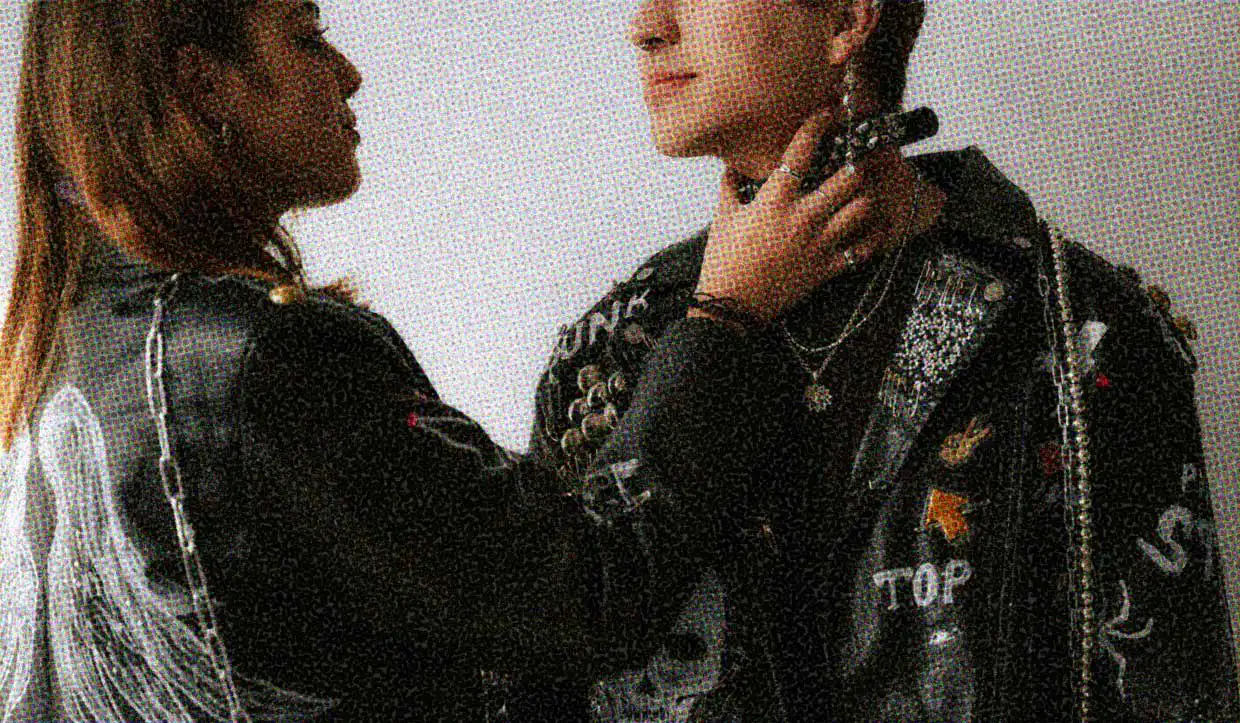
Leather is also deeply tied to power. Part of what makes it compelling in BDSM contexts is how effectively it communicates dominance and submission without anyone saying a word. A harness, a collar, a pair of cuffed gloves – these aren't neutral objects. They signal intent and identity, and that symbolism is part of the charge. Leather gear has long functioned as a kind of visual language within kink communities, allowing people to signal desire, role, and interest before a conversation even starts.
Leather culture as a recognisable community took shape in post-war America, where it overlapped heavily with gay motorcycle clubs. For queer men in the 1940s and 50s, these spaces offered more than just a shared interest in bikes – they were some of the only places where same-sex desire could be explored with any degree of openness. Leather became a shorthand for a particular kind of masculinity that pushed back against the effeminate stereotypes used to dismiss gay men at the time. The aesthetic brought connotations of strength and sex to black leather in a way that spread quickly through queer communities on both coasts and eventually across the Atlantic to London, Berlin, and Amsterdam.
Women, particularly lesbian and bisexual women, have their own significant history within leather culture, though it's less documented. Activist Pat Califia was instrumental in establishing lesbian leather and S/M spaces in San Francisco in the late 1970s, helping shape a community that wasn't just riding on the coattails of gay male leather culture but building its own traditions alongside it.
Today, leather culture is far more inclusive than its origins might suggest. It spans gender identities, sexual orientations, and levels of BDSM involvement. Some people are embedded in the community and its traditions, while others simply love the material and what it does to their senses.
Leather doesn't require a full wardrobe or a community membership to be part of your sex life. A lot of people start with one piece, like a bra worn during sex, a pair of gloves, or a collar, and find that the sensory experience adds something they weren't expecting. Others are drawn to leather gear specifically designed for kink: Harnesses, restraints, paddles, cuffs. Within BDSM dynamics, leather is often used to reinforce a D/s (dominance and submission) setup, both symbolically and physically.
If you're curious, wearing leather yourself or incorporating it into scenes with a partner are both straightforward starting points. If it's the power dynamic as much as the material that appeals, talking openly with a partner about what you're imagining, and what you'd both be comfortable with, is where that exploration actually begins.
As with any kink, the essentials are the same: Communication, consent, and making sure everyone involved is on the same page before anything starts.
HUD App’s Bedroom™ feature lets you share your desires, interests, and boundaries as part of your profile, making it easier to connect with people who are looking for similar experiences. It takes some of the guesswork out of those early conversations and helps everyone start from a place of honesty.
A leather fetish is a sexual attraction to leather: Its appearance, texture, smell, sound, and the power dynamics it represents. It's consistently ranked among the most common material fetishes, and part of what makes it distinct is how many senses it engages at once. For some people the appeal is purely sensory. For others it's tied to the symbolism leather carries around dominance, submission, and identity. Both are common, and the two often overlap.
Leather culture as a recognisable community emerged in post-war America, rooted in gay motorcycle clubs that gave queer men rare spaces to explore identity and desire openly. From there it spread through queer communities across the US and into cities like London, Berlin, and Amsterdam. Women, particularly lesbian and bisexual women, built their own leather and kink spaces alongside gay male leather culture from the late 1970s onward. Today, leather culture spans gender identities and sexual orientations, and ranges from people deeply embedded in its traditions to people who simply love what the material does for them.
Most people start small, wih a single piece of leather worn during sex, or incorporated into a scene with a partner. From there, some move into gear designed specifically for kink: Harnesses, cuffs, collars, restraints. Within BDSM dynamics, leather often reinforces a dominance and submission setup both visually and physically. If the power dynamic is as much a draw as the material itself, an honest conversation with a partner about what you're each curious about is the most useful place to begin.
Read more
Wellbeing
What is compersion?
Compersion is often called the opposite of jealousy. Here's where the word came from, how it connects to polyamory, and what it feels like.