
Tentacle fetish has a reputation for being one of the internet’s strangest obsessions, but it has a far longer and richer cultural history than most people realise. Tentacle erotica appears in art, literature, and popular media across centuries. In many ways, it showcases one of the simplest truths about human sexuality: Your imagination will always go places your body cannot.
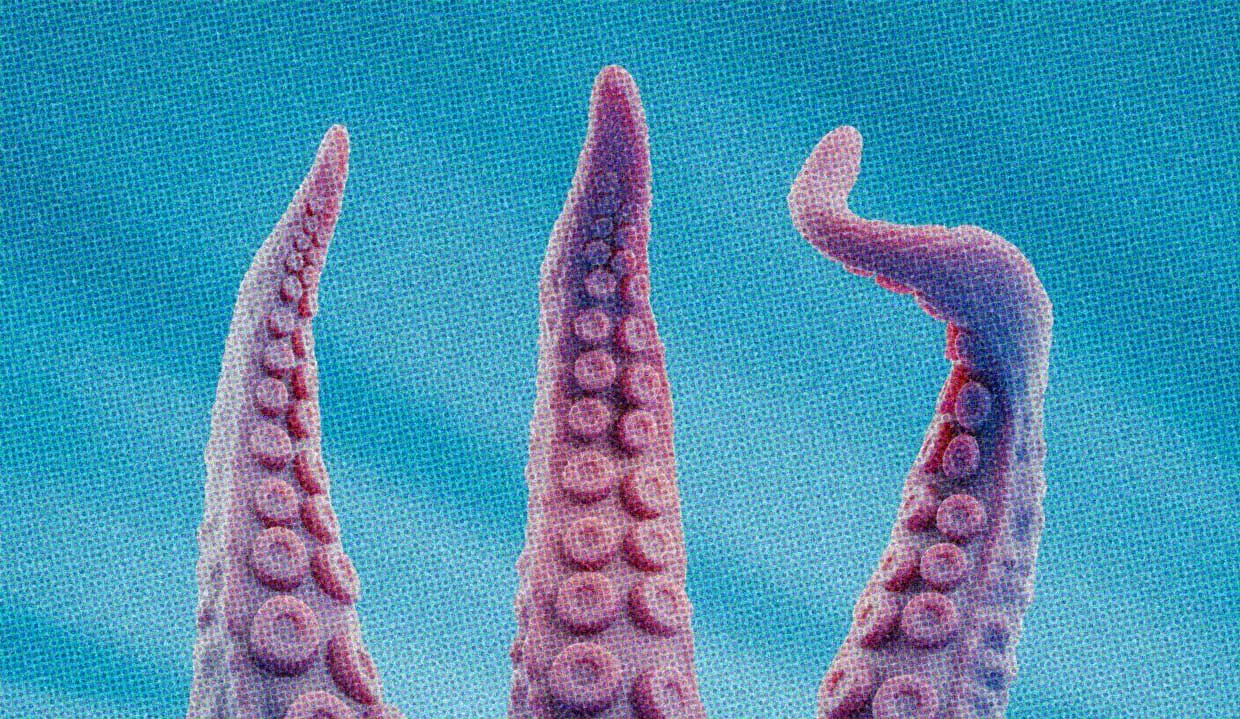
Good ol' Wikipedia describes tentacle fetishism as erotic imagery involving beings with tentacles, often appearing in manga, anime, or fantasy artwork. Importantly, it is rarely about literal sea creatures. This is not about shagging a squid. Instead, tentacles serve as symbolic stand-ins for themes like restraint, curiosity, intensity, and surrender.
One of the most famous early examples is The Dream of the Fisherman’s Wife, drawn in 1814 by Japanese artist Katsushika Hokusai (the same artist who created the very famous Great Wave off Kanagawa). Part of the shunga erotic art tradition, the illustration is playful, surreal, and far more focused on pleasure than horror. Today it is held in major museum collections and frequently cited in discussions about the origins of tentacle erotica. It's hard to look away from!
Moving forward to the mid 1980s, one of the major reasons tentacle erotica became globally known is Urotsukidōji. Created by Toshio Maeda, Urotsukidōji (often translated as Legend of the Overfiend) is widely recognised as the title that codified what came to be known worldwide as “tentacle porn.” What made it pivotal wasn’t just its shock value; it was the fact that Urotsukidōji circumvented strict Japanese censorship laws by using tentacles (or imaginary appendages) instead of human genitalia. That legal workaround allowed erotic content to remain graphic yet “within bounds,” and the resulting anime and manga became some of the first to export explicit fetish-oriented material abroad.
When Urotsukidōji reached Western audiences, it had a seismic effect: The combination of horror, fantasy, taboo-breaking visuals, and surreal eroticism introduced many viewers to an erotic style wildly different from conventional adult media. Over time, the tentacle genre expanded beyond the original horror-hentai roots into art, fanfiction, and fantasy erotica, cementing tentacles as a recurring symbol of fetish imagination.
And it shows up in mainstream media, too. An incredibly compelling scene in Season 2 of the cancelled Netflix show The OA featured Old Night, a giant telepathic octopus who communicates with the main character Nina Azarova/Prairie by wrapping his tentacles around her arms and suctioning on. In the scene, Nina, who is strapped to a chair on a stage in front of a nightclub audience, is wearing a long red velvet dress and glamorous makeup; one doesn’t commune with an octopus the size of a school bus in sweats and a messy bun. As Esther Zuckerman writes, “At first the scene is stunning, almost laughable, in its sheer oddity, but then the mood morphs, as it pulsates with existential terror and a sort of unnerving sexuality. Old Night's tentacles almost caress Prairie's body and expose her bare leg from the slit in her glamorous red dress.”
Tentacle fantasies allow for experiences that go beyond human anatomy, which makes them uniquely flexible as erotic symbols. Tentacles can be gentle or overwhelming, playful or enveloping, soft or firm. Because they can move independently, the fantasy can include sensations or positions that humans cannot achieve. For many, that impossible quality is exactly what makes the imagery exciting.
There is also a psychological appeal. Tentacles can represent a form of being held or guided without the emotional complexity of a human partner. There is no risk of judgment, social expectation, or miscommunication in an encounter with a fictional creature. Instead, the fantasy becomes a controlled environment where someone can explore surrender or curiosity at their own pace.
Consent and control sit at the heart of this kink, despite its surreal imagery. In the real world, tentacle play usually shows up as roleplay, toys, restraints or sensory experimentation rather than anything literal. The fantasy may be extreme, but the practice tends to be grounded, communicative and surprisingly lighthearted.
Manufacturers around the world now make a surprisingly wide variety of tentacle-inspired adult toys, from soft silicone tentacle dildos to textured “monster-style” vibrators and more experimental shapes that blend suction cups, ridges, and flexible tentacle-like appendages. (Reminder: Tentacles or otherwise, always use plenty of lube and make sure you clean your toys properly.) There are also toys meant for surface play, teasing, or creative sensory exploration. Bands of ridged or textured silicone, flexible tentacle sleeves, or even glow-in-the-dark fantasy options all exist – the tentacle adult toy market is much more exciting than you might think.
Tentacle fantasies endure because they let people explore erotic possibility without being confined to what is realistic. They dissolve the boundaries of the human body and create space for expression that is exaggerated and fluid. When someone enjoys this fetish, they are not (usually) longing for a real live octopus to get down with. They are chasing a feeling: The thrill of intensity, the release of letting go, the creativity of playing outside the usual rules.
Fantasy lets people explore these feelings safely. It gives them distance from real-world power dynamics and lets them shape the experience exactly how they want it. In that sense, tentacle erotica is less about monsters and more about imagination. It reveals how inventive people can be when they are curious about themselves and open to exploring desire in unconventional ways.
HUD App’s Bedroom™ feature lets you share your desires, interests, and boundaries as part of your profile, making it easier to connect with people who are looking for similar experiences. It takes some of the guesswork out of those early conversations and helps everyone start from a place of honesty.
Erotic attraction to tentacled beings — primarily through anime, manga, and fantasy artwork rather than anything literal. The appeal is imaginative, rooted in fantasy, surrender, and the otherworldly.
The fantasy offers complete detachment from reality — a being that operates outside human social rules, anatomy, and expectations. Research cited by Lewd Pill suggests this detachment reduces guilt or shame, allowing people to explore surrender and taboo themes without feeling directly implicated.
18th-century Japanese woodblock prints, most famously Hokusai's The Dream of the Fisherman's Wife (1814). When modern Japanese censorship laws prohibited showing human genitalia in pornography, artists used tentacles as a creative workaround — they weren't technically human anatomy, so they bypassed obscenity regulations.
Read more
Desires
Fetish 101: Erotic humiliation
For some people, being called degrading names and loving it isn't a contradiction, it's a kink. Here's what erotic humiliation involves, and how to play with it safely.