
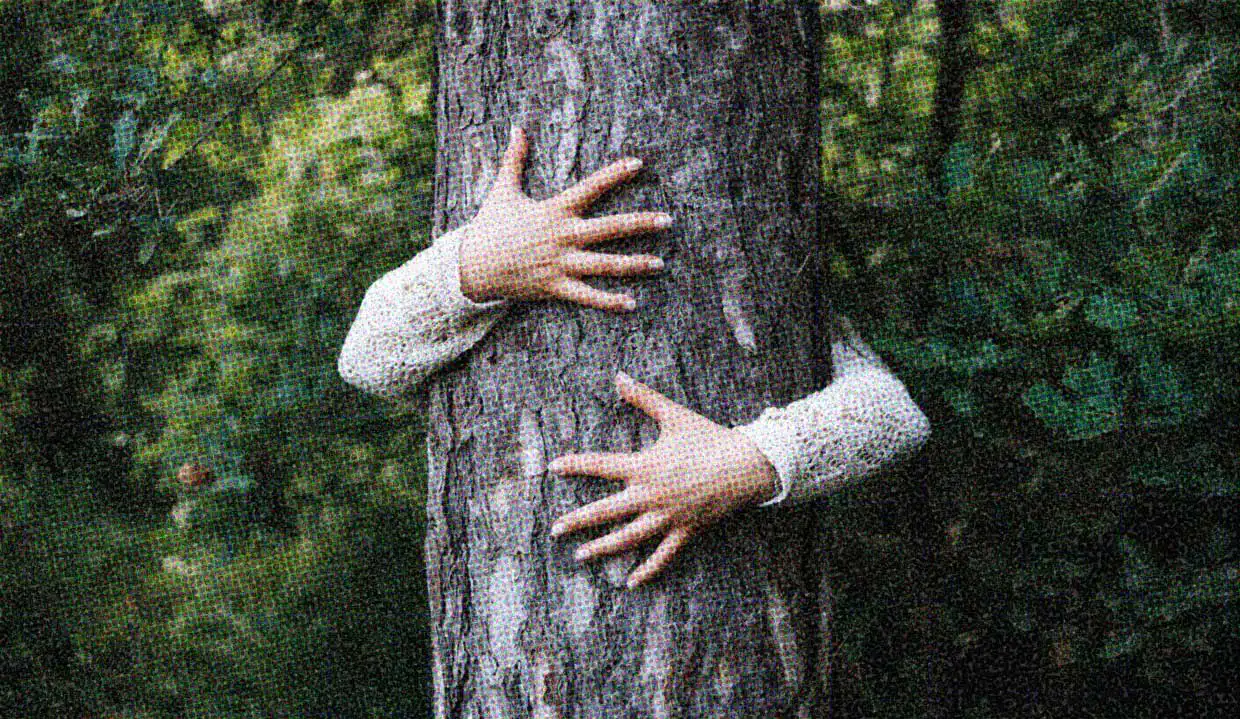

You've probably hugged a tree at some point, being silly or because you were just enjoying nature. There's something calming about being near one – the size, the texture, the sense of something ancient and steady that has been here for a long time and will be here long after you’re gone. For a small number of people, that fondness for nature tips into a genuine sexual and emotional attraction known as dendrophilia.
Dendrophilia, sometimes called arborphilia, literally translates to “love of trees”, and it describes an attraction to trees that goes beyond aesthetic appreciation. It sits on a spectrum. At one end, people feel a deep, almost spiritual connection to nature that carries a mild erotic undertone, something plenty of people experience without ever labelling it a fetish. At the other end, some people experience trees as a genuine object of desire, which is dendrophilia in its more specific sense.
Like most fetishes involving an unconventional object of attraction, it's not really about the tree as a piece of wood. It's about what the tree represents: Strength, stillness, growth, and a kind of permanence that's hard to find anywhere else.
Trees have carried symbolic and sexual weight across cultures for a long time. Fertility rituals involving forests and trees show up throughout ancient history, and phallic tree symbolism is nothing new either. The English poet Andrew Marvell wrote with distinctly dendrophilic themes centuries ago, so the attraction, or at least the artistic fascination with it, isn't a modern internet invention.
Pop culture has occasionally poked at the idea too, though rarely with much accuracy. The infamous "tree" scene from Evil Dead gets brought up constantly, despite having very little to do with actual dendrophilia, which is about a person choosing to form an attraction to a tree, not the other way around. A more accurate, if stranger, cultural reference is Metronomy's music video for "The Upsetter," which reimagines a breakup through the story of a forest-dwelling woman who builds herself a new companion out of leaves, closer in spirit to what dendrophilia actually looks like as a fantasy or an emotional attachment.
There's also a gentler version of this idea in Avatar, where Jake and Neytiri's most intimate moment together happens beneath the Tree of Voices, its glowing tendrils physically linking them to each other and to the planet itself. It's not framed as sexual on screen, but the film leans hard into trees as vessels of connection, memory, and intimacy, which is exactly the emotional territory dendrophilia tends to live in. And the movie Wicker takes the idea even further. Olivia Colman plays a woman who commissions a husband woven from wicker, played by Alexander Skarsgård, and finds herself drawn to him in ways that unsettle her whole village. He's not a tree exactly, but the same fascination with a lover made from plant material runs right through it.
Not necessarily. For a lot of people who identify with dendrophilia, the appeal has as much to do with intimacy, safety, and groundedness, as it does with arousal itself. Trees don't judge, don't leave (no pun intended), and don't ask anything of you, which for some people is exactly the point.
Because dendrophilia mostly plays out through appreciation rather than contact, it's a pretty low-risk fetish by kink standards. People explore it through spending time in nature, writing, drawing, photography, or simply sitting with a tree and noticing how it makes them feel. If physical touch is part of it, hugging or leaning against a tree is about as far as most people take things, though even that comes with practical considerations like avoiding sap, splinters, or irritating bark.
But do you want to go to your local park and start rubbing yourself up against trees in full view of strangers, parents with prams, and people attending Parkrun? Consider your audience (and whether it's appropriate to have one at all). You might want to go somewhere a bit more remote and off the beaten path (oh, so many good puns) where you can explore your feelings privately, or at least with a bit more privacy.
If you're keen to get a partner involved, maybe plan a (safe!) day hike into a secluded forest, spread a blanket on the forest floor, and spend some time laying and looking up at the branches before you move closer to the actual trees themselves, then touch the bark, feel the peace and tranquility of your surroundings, and just commune with nature.
HUD App’s Bedroom™ feature lets you share your desires, interests, and boundaries as part of your profile, making it easier to connect with people who are looking for similar experiences. It takes some of the guesswork out of those early conversations and helps everyone start from a place of honesty.
Dendrophilia, also called arborphilia, is an attraction to trees that goes beyond ordinary appreciation of nature. It exists on a spectrum, ranging from a spiritual connection to trees with mild erotic undertones, to trees becoming a genuine object of sexual or emotional desire.
Not always. Many people drawn to dendrophilia describe it as being about intimacy, safety, and groundedness as much as arousal, finding a sense of connection or comfort in a tree's stillness and permanence rather than pursuing physical contact.
Most people explore dendrophilia through low-contact activities like spending time in nature, writing, drawing, or photography, rather than direct physical interaction. When touch is involved, such as hugging or leaning against a tree, it's worth being mindful of sap, splinters, or bark that could cause minor irritation.
Read more
Desires
What's in your bedroom? How My Bedroom™ works on HUD App
The awkward “So, what are you into?” chat has a shortcut. My Bedroom™ lets you share your desires your way, and keep them private until you've matched.