
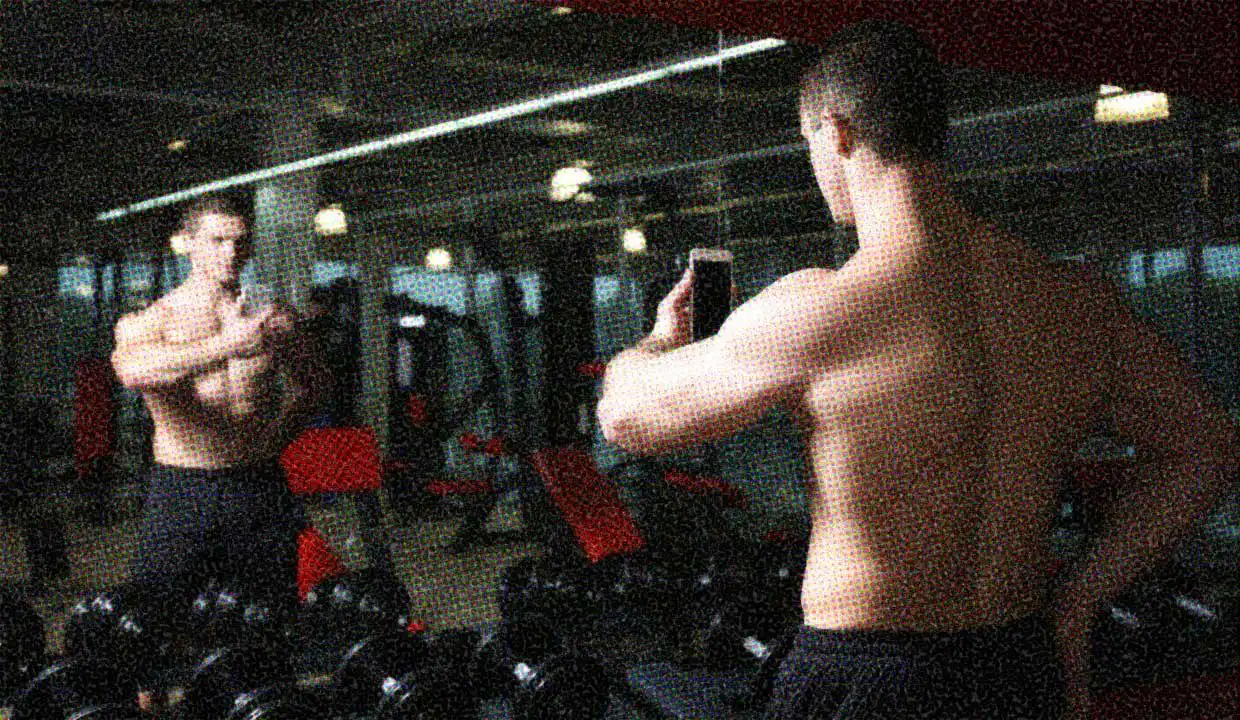

Ask any woman to describe the photos she's seen guys post on dating apps and she'll rattle off a few well-known tropes: The big fish, the car/truck/motorcycle, the gym mirror, the bar/beer, the bathroom selfie. If you ask one of the guys why he's chosen one (or more) of those photos, he might say he likes how he looks, it was a good day, he was proud of his fish/truck/motorcycle/muscles, and the pic captures something true about who he is. He's not lying, but what's missing is who the photo is actually for - and it may not be the women he wants to attract.
Because when researchers went and asked women what they thought of the fish photo, the answer was not admiration. It registered as a stranger holding a dead animal, with no clue why it should matter to her. The man reading pride and achievement into that image is not wrong about what he felt catching the fish. He is wrong about what the image communicates to someone who wasn't there.
This is not really a fish problem. It's a wider pattern, and there's a decent amount of research behind it. Men aren't literally expecting other men to scroll past their dating profiles. Instead, they're imagining themselves in competition with every other guy a woman could match with. The catch is that they often assume women are judging that competition using the same scorecard men use with each other. So the profile ends up showcasing traits that signal status to other men, rather than the qualities women consistently say they're looking for.
Evolutionary psychologists have a name for this: Intrasexual competition, the tendency for men to size themselves up against other men rather than through the eyes of the person they're trying to attract. That mindset doesn't disappear just because the audience changes to women. Instead, it shapes what men think they need to display in order to "beat" the competition. Research on how men behave toward same-sex versus opposite-sex others has found that men consistently act more competitively when another man is involved, in a way that doesn't hold for women. That competitiveness doesn't simply disappear on a dating app. It changes shape. The result is profiles that often optimise for status among men rather than attraction for women.
There's also a body of work on what's sometimes called the audience effect, originally studied in animal courtship, where a male's display shifts because other males are watching and interpreting it, not because it will necessarily land better with a mate. Swap out birds for men taking photos at the gym, in front of a sports car, or on a boat, and the pattern is uncannily familiar. The gym mirror shot isn't only about looking attractive to a woman scrolling past it. It's also a display of effort that other men immediately understand: The hours, the discipline, the physique as proof of work done. To a woman with no context for any of that, it can simply read as a man who loves himself a little too visibly (especially if he's kissing his bicep).
None of this means men should stop being proud of the things they're proud of. It means the translation is getting lost. Women are often looking for different signals than the ones men use to evaluate each other - who he actually is and whether he'd be safe, interesting, kind, and fun to be around. A shirtless photo paired with a bio about taking his Grandma out for lunch doesn't read as well-rounded to her the way a man might hope. Research on sexualised dating app profiles found that when women were shown that combination, they didn't relax into it. They got suspicious, reading the mismatch as a sign the caring bio was a performance layered over the real intention. Confidence and warmth need to agree with each other, not just sit side by side in the same six photos.
The uncomfortable part of all this is that the instinct behind the fish, the mirror selfie, and the flexed bicep isn't vanity so much as habit. Men spend years learning how status is earned among other men, at school, on the sports field, at work, and in friend groups. So when they build a dating profile, it's easy to assume women are using that same mental checklist to compare them against everyone else. But they often aren't. The fix isn't performing less; it's recognising that the person doing the judging isn't another man. A profile aimed at the person you're actually hoping will match with you usually works far better than one built to win a competition she's never entered.
That's the whole idea behind HUD App's Profile Builder. We're not stripping out personality, we're helping men communicate it in a way that resonates with the audience they're actually trying to attract, instead of the imagined competition they think they're trying to beat.
Read more
Desires
Fetish 101: Cuckolding
What makes someone aroused by their partner being with someone else? Here is the psychology, the history, and the practical side of cuckolding.